Head and neck cancer spread varies by tumor type, stage, and patient lifestyle. While some grow slowly over months, aggressive types can double in size within weeks. Typically, these cancers spread first to nearby lymph nodes in the neck before potentially moving to distant organs like the lungs. Early diagnosis is critical for better outcomes.
Hello, I am Dr. Shashank Chaudhary, and as a dedicated surgical oncologist in Lucknow, I meet many patients and families who are understandably anxious when they hear the word “cancer.” One of the most frequent questions I get in my clinic is: “Doctor, how fast is this spreading? Do we have time?”
Understanding the speed and nature of cancer growth is the first step toward fighting it. In this guide, I will explain how head and neck cancer behaves, what influences its speed, and why seeing a head & neck cancer specialist in Lucknow at the earliest sign can make all the difference.
What is Head and Neck Cancer? (A Simple Explanation)
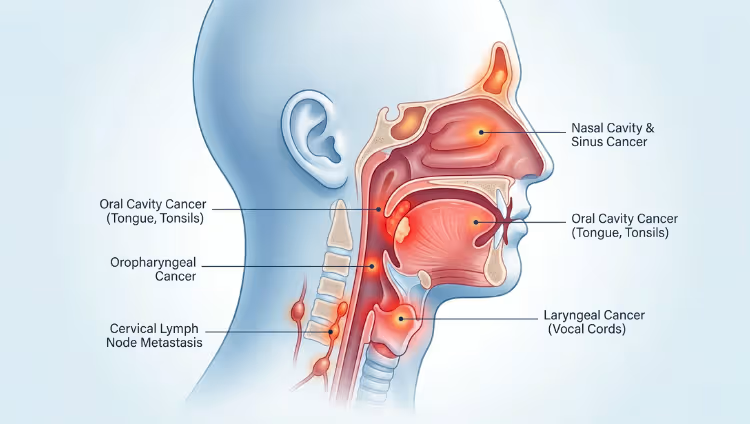
To understand how fast it spreads, we first need to know what it is. Head and neck cancer is a group of cancers that start in the moist surfaces (mucous membranes) inside your head and neck—like the mouth, nose, and throat.
Types of Head and Neck Cancer:
- Oral Cancer: Starts in the lips, tongue, cheeks, or gums.
- Throat Cancer (Pharynx): Affects the tube that runs from your nose to your esophagus.
- Voice Box Cancer (Larynx): Affects the area where your vocal cords are located.
- Salivary Gland Cancer: Affects the glands that produce saliva.
- Nasal & Sinus Cancer: Affects the hollow spaces inside your nose and skull.
Most of these cancers are “Squamous Cell Carcinomas.” Think of “Squamous cells” as the flat skin cells that line the inside of your mouth and throat. When these cells grow out of control, they form a tumor.
How Fast Does Head and Neck Cancer Spread?
There is no single “speed” for cancer. It isn’t like a car driving at a constant 60 miles per hour. Instead, it’s more like a fire. If the wood is dry and there is a lot of wind, the fire spreads fast. If the conditions are different, it might smolder slowly.
Generally, head and neck cancers are considered relatively aggressive. If left untreated, a small ulcer in the mouth can grow into a noticeable lump within a few weeks or months.
In my experience as the best surgical oncologist in Lucknow, I have seen that the “speed” usually follows a pattern:
- Local Growth: The tumor gets bigger at the original spot (like the tongue).
- Regional Spread: The cancer cells “break off” and travel through the lymphatic system to the lymph nodes in the neck.
- Distant Spread (Metastasis): In later stages, the cancer may travel through the blood to the lungs, liver, or bones.
Factors That Affect Cancer Spread Speed
Why does cancer spread faster in some people than in others? As a cancer specialist in Lucknow, I look at several key factors:
1. The Grade of the Tumor
Under a microscope, we look at how “angry” the cells look.
- Low-grade cells look almost like normal cells and grow slowly.
- High-grade cells look very abnormal and divide very rapidly.
2. The Stage at Diagnosis
If the cancer is caught in Stage 1, it is localized. If it has already reached the lymph nodes (Stage 3), it is already in “travel mode,” meaning it can spread faster to other parts of the body.
3. Lifestyle Habits
This is a hard truth: Smoking and heavy alcohol use act like “fuel” for the fire. Patients who continue to smoke often see much faster tumor growth compared to those who do not.
4. Immune System Strength
Your body has a natural defense system. A person with a strong immune system and good nutrition can sometimes “contain” the cancer longer than someone whose body is weakened by other illnesses.
Common Symptoms of Head and Neck Cancer
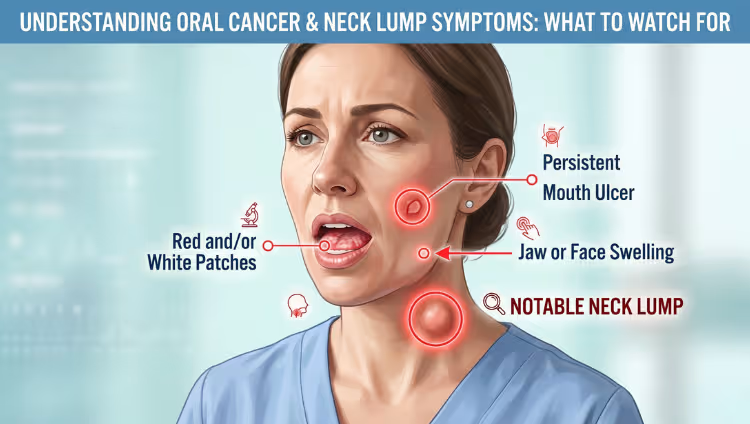
Knowing the symptoms helps you catch the disease before it has a chance to spread. If you notice any of these for more than two weeks, please consult a professional.
- Mouth Ulcers: A sore or red/white patch in the mouth that does not heal.
- Lump in the Neck: This is often the first sign that cancer has spread to the lymph nodes.
- Difficulty Swallowing: A feeling like food is “stuck” in the throat.
- Voice Changes: Persistent hoarseness or a change in how you speak.
- Ear Pain: Surprisingly, throat cancer can cause pain in the ear.
- Unexplained Weight Loss: This often happens when the body is working too hard to fight the growing tumor.
Can Head and Neck Cancer Spread to Other Parts of the Body?
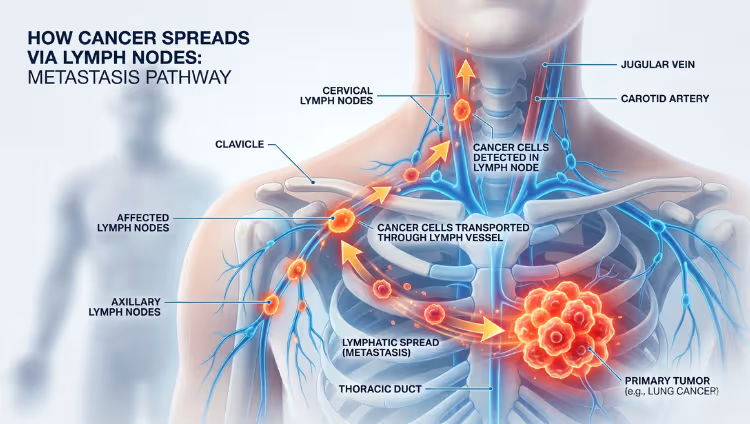
Yes, it can. Patients often ask, “Can mouth cancer spread to other parts of the body?” The answer is yes, but it usually follows a specific path.
Most head and neck cancers stay within the neck area for a long time. They move from the mouth or throat to the lymph nodes in the neck. Think of lymph nodes as “filters.” They catch the cancer cells. However, if the nodes become full, the cancer can move into the bloodstream and travel to the lungs (the most common site for distant spread), the liver, or the bones.
This is why early surgical intervention is so important. By removing the primary tumor and the affected lymph nodes, we can often stop the cancer before it reaches the rest of the body.
Is Head and Neck Cancer Curable?
The word “cancer” is scary, but the news is often positive if we act fast.
- Early Stage (Stage 1 & 2): When the cancer is small and hasn’t spread, the cure rate is very high, often above 80% to 90%. Simple surgery or radiation is usually enough.
- Advanced Stage (Stage 3 & 4): This is more complex. It requires a combination of surgery, radiation, and sometimes chemotherapy. While more difficult to treat, many patients still achieve long-term remission.
As a cancer specialist in Lucknow, my goal is always to preserve the patient’s quality of life—meaning we want to save your ability to speak, eat, and breathe properly while removing the cancer.
Survival Rate and Importance of Early Treatment
The “survival rate” is a statistic that tells us what percentage of people live for at least five years after diagnosis.
For many head and neck cancers caught early, the 5-year survival rate is excellent. However, if the cancer spreads to distant organs, that rate drops significantly. This highlights why “waiting and watching” is never a good idea with a mouth ulcer or a neck lump.
A Real-Life Scenario
Let me share a story (anonymized for privacy).
- Patient A noticed a small white patch on his tongue. He visited me immediately. We performed a minor surgery, and he was back at work in a week. He is now 5 years cancer-free.
- Patient B had a similar patch but thought it was just a “heat ulcer” from stomach issues. He used home remedies for six months. By the time he saw me, the cancer had spread to three lymph nodes in his neck. He required major surgery, reconstruction, and radiation.
The “speed” of spread was the same for both, but the timing of the consultation changed their lives.
When Should You See a Doctor?
You don’t need to panic over every mouth sore, but you should be vigilant. You should consult the best oncologist in Lucknow if you experience:
- A mouth ulcer that doesn’t heal in 2-3 weeks.
- A painless lump in the neck that is getting bigger.
- Persistent hoarseness or coughing.
- A red or white patch on the gums, tongue, or lining of the mouth.
Early evaluation is the most powerful tool we have.
Frequently Asked Questions
1. What are end-stage head and neck cancer symptoms?
In very advanced stages, symptoms may include severe pain, difficulty breathing, inability to swallow, significant weight loss, and extreme fatigue. At this stage, the focus often shifts to palliative care to ensure the patient is comfortable and pain-free.
2. What are women’s head and neck cancers?
The symptoms are largely the same as in men: lumps in the neck, throat pain, or sores in the mouth. However, women sometimes ignore these symptoms, attributing them to common infections or thyroid issues. Any persistent change should be checked.
3. What is the head and neck cancer survival rate?
If caught early (Stage 1), the survival rate is often 80-90%. If it has spread to distant organs, the rate is lower, which is why early detection by a cancer specialist in Lucknow is so vital.
4. Can mouth cancer spread to other parts of the body?
Yes. It typically spreads to the lymph nodes in the neck first. From there, it can travel to the lungs, bones, or liver if not treated in time.
5. How long does throat cancer take to kill you?
This is a difficult and sensitive question. Without any treatment, aggressive throat cancer can become life-threatening within months to a year. However, with modern treatment, many people live long, full lives even after a diagnosis.
6. What are the symptoms of neck cancer in a lymph node?
The main symptom is a firm, usually painless lump in the neck that doesn’t go away with antibiotics. It may feel “fixed” in place rather than sliding under the skin.
7. Is head and neck cancer curable?
Yes, especially when detected early. Even advanced cases can often be managed effectively with a combination of surgery, radiation, and chemotherapy.
8. Does oral cancer spread from one person to another?
No. Cancer is not contagious. You cannot “catch” oral cancer by kissing, sharing food, or being near someone who has it.
My Approach to Care
In my practice, I believe that every patient is a person, not just a case number. Treating cancer requires more than just surgical skill; it requires empathy, clear communication, and a plan tailored to the patient’s life.
As a surgical oncologist, my specialty is removing the tumor with “clear margins” (ensuring no cancer is left behind) while using advanced techniques to ensure you can still look and feel like yourself after the surgery.
Final Thoughts from Dr. Shashank Chaudhary
If you or a loved one is worried about a symptom, please remember: Fear is natural, but delay is dangerous. Most lumps are not cancer, but the only way to know for sure is to get an expert opinion.
Modern medicine has come a long way. We have better tools, better surgeries, and better outcomes than ever before. But the most important “tool” in the room is your decision to seek help early.
Take Control of Your Health Today
If you notice persistent symptoms like ulcers, neck lumps, or changes in your voice, do not wait for them to “go away” on their own. Early intervention saves lives and simplifies treatment.
Consult Dr. Shashank Chaudhary – widely regarded as the best surgical oncologist in Lucknow for advanced and compassionate cancer care.
Whether you need a second opinion or a primary evaluation, reach out to a trusted Cancer specialist in Lucknow today.
Your health is your greatest asset. Let’s protect it together.