Pancreatic cancer begins in the tissues of your pancreas, an organ behind the stomach. Common symptoms include jaundice, upper abdominal pain, and unexplained weight loss. While causes include smoking and genetics, early treatment is critical because this “silent” cancer spreads rapidly. Consulting a specialist early significantly improves survival rates.
Finding out you or a loved one might be facing a pancreatic issue is overwhelming. The pancreas is a small, leaf-shaped organ that plays a massive role in your health, managing blood sugar and helping you digest food. When things go wrong, the symptoms can be subtle, often mimicking common digestive issues.
In this guide, we will break down the early warning signs, causes, and modern treatment options. With the expertise of Dr. Shashank Chaudhary, a leading cancer Specialist in Lucknow, we aim to provide clarity, hope, and a roadmap for those seeking pancreatic cancer treatment.
What Exactly Is Pancreatic Cancer?
Pancreatic cancer starts when cells in the pancreas develop mutations in their DNA. These mutations tell the cells to grow uncontrollably and to continue living after normal cells would die. These accumulating cells can form a tumor.
There are two main types:
- Exocrine tumors: These make up over 90% of cases (including Adenocarcinoma). They start in the ducts that carry digestive juices.
- Neuroendocrine tumors (NETs): These are rarer and start in the hormone-producing cells.
Understanding pancreatic tumor symptoms starts with knowing that the pancreas is located deep in the abdomen. Because of this, tumors often grow quite large before they can be felt during a physical exam, which is why paying attention to internal “warning signals” is so important.
“I Ignored These Symptoms at First” – Early Signs Patients Often Miss
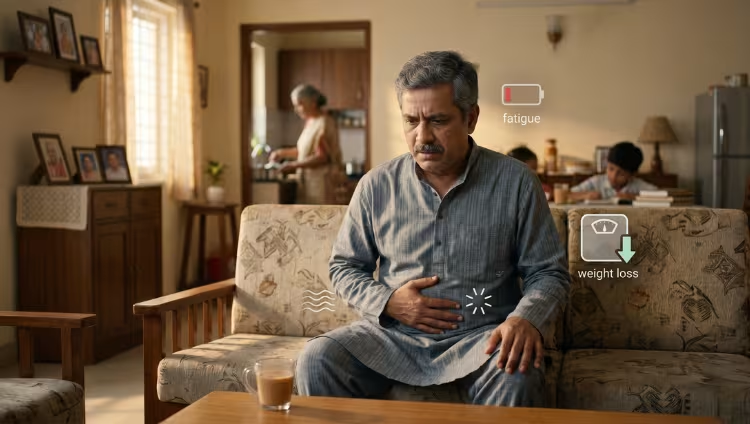
Many patients who visit Dr. Shashank Chaudhary for pancreatic cancer treatment mention that they initially thought they just had a stomach bug or “bad acidity.” Because the symptoms are vague, they are often overlooked.
1. Jaundice (Yellowing of Eyes and Skin)
This is often the first “real” sign. If a tumor blocks the bile duct, bilirubin builds up in the blood. You might notice:
- Yellowing of the whites of the eyes.
- Dark-colored urine (looking like tea or cola).
- Pale, clay-colored, or greasy stools that float.
2. Sudden Weight Loss
Losing 5-10 kgs without trying is a major red flag. In pancreatic cancer, the body burns calories faster than usual, and the tumor may consume the body’s energy.
3. New-Onset Diabetes
If you are an adult with a healthy weight and suddenly develop Type 2 diabetes, it could be a sign that a tumor is affecting the pancreas’s ability to produce insulin.
Symptoms Women Should Never Ignore
While many pancreatic cancer warning signs are the same for everyone, women may experience them differently due to how they interact with digestive health.
- Vague Bloating: Women often dismiss bloating as hormonal or related to diet. However, persistent bloating that doesn’t go away with a change in diet should be checked.
- Early Satiety: Feeling “full” after only a few bites of food.
- Mid-Back Pain: Women often report a dull ache in the middle back that feels like muscle strain but doesn’t respond to rest or massage.
Pancreatic Cancer Symptoms in Men
Statistically, men are slightly more likely to develop pancreatic cancer, often due to higher rates of smoking and industrial chemical exposure.
- Digestive Distress: Men often ignore “indigestion” for months, treating it with over-the-counter antacids.
- Changes in Bowel Habits: Specifically, steatorrhea (oily, foul-smelling stools) is caused by the lack of pancreatic enzymes to break down fat.
- Depression: Interestingly, many men report a period of clinical depression or anxiety months before a physical diagnosis.
What Causes Pancreatic Cancer?
While the exact cause isn’t always known, certain risk factors make it more likely.
- Smoking: This is the most significant avoidable risk factor. Chemicals in tobacco damage the pancreas.
- Chronic Pancreatitis: Long-term inflammation of the pancreas, often linked to heavy alcohol use or gallstones.
- Genetics: About 10% of cases are linked to inherited gene mutations (like BRCA1 or BRCA2).
- Obesity and Diet: High-fat diets and lack of physical activity increase the risk.
- Age: Most cases occur in people over the age of 60.
Pancreatic Cancer Symptoms by Stage (Visual Chart)
| Stage | Description | Common Symptoms |
| Stage 0 (In Situ) | Abnormal cells found in the lining of the pancreas. | Usually asymptomatic (no symptoms). |
| Stage I | Tumor is confined to the pancreas (under 2cm or 4cm). | Mild indigestion, slight weight loss, fatigue. |
| Stage II | Tumor has grown outside the pancreas or to nearby lymph nodes. | Jaundice begins, persistent abdominal pain. |
| Stage III | Tumor has spread to major nearby blood vessels/nerves. | Ascites (fluid in belly), extreme fatigue, and bone pain. |
| Stage IV | Cancer has spread to distant organs (liver, lungs). | The tumor has grown outside the pancreas or to nearby lymph nodes. |
Where Is Pancreatic Cancer Back Pain Usually Felt?
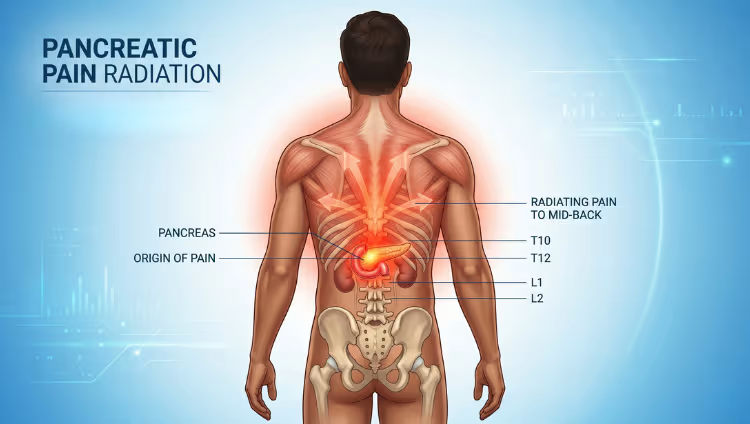
One of the most searched digestive cancer symptoms is a specific type of back pain.
Unlike a “pulled muscle,” pancreatic back pain:
- Feels like a “gnawing” or “boring” sensation.
- Originates in the upper abdomen and “radiates” or travels straight through to the middle or lower back.
- The Eating Test: The pain often gets worse after eating a heavy meal.
- The Position Test: The pain may feel slightly better when you lean forward and worse when you lie flat on your back.
Signs the Cancer May Have Spread
When cancer moves beyond the pancreas (metastasis), new symptoms appear depending on where the cells land.
- To the Liver: Enlarged liver (felt under the right ribs), increased jaundice, and fluid buildup in the legs (edema).
- To the Peritoneum: This causes Ascites, where the abdomen swells significantly with fluid, making it hard to breathe or eat.
- To the Lungs: Persistent cough or shortness of breath.
End-Stage Pancreatic Cancer Symptoms Explained Compassionately
In the final stages, the focus shifts from “cure” to “quality of life” and comfort. This is a difficult time for families, and understanding what to expect can help you prepare.
- Extreme Fatigue: The patient may sleep most of the day and have very little energy for conversation.
- Loss of Appetite: The body no longer requires the same amount of fuel.
- Confusion: Toxins building up in the blood (because the liver/pancreas are struggling) can lead to “brain fog” or restlessness.
- Pain Management: With the help of a cancer specialist in Lucknow like Dr. Shashank Chaudhary, pain can be managed effectively through medication and nerve blocks to ensure the patient remains comfortable and dignified.
Mandatory Visual Section: Symptom & Treatment Comparison
Table 1: Early vs. Advanced Symptom Comparison
| Symptom Type | Early-Stage Sign | Advanced-Stage Sign |
| Pain | Mild “nagging” in the stomach | Sharp, constant pain radiating to the spine |
| Digestion | Occasional gas or bloating | Severe nausea, vomiting, and inability to eat |
| Appearance | Subtle paleness or tiredness | Deep yellow skin (jaundice), skeletal weight loss |
| Energy | Needing an extra nap | Inability to get out of bed |
Table 2: Treatment Comparison Table
| Treatment Method | Purpose | When it’s Used |
| Whipple Procedure (Surgery) | To remove the tumor completely | Early-stage (Stage I or II) |
| Chemotherapy | To kill cancer cells throughout the body | Pre-surgery or for Advanced stages |
| Radiation Therapy | To shrink tumors using high-energy beams | To control pain or shrink local tumors |
| Immunotherapy | To help the immune system fight cancer | Specific genetic profiles |
Modern Pancreatic Cancer Treatment Options

Medical science has advanced significantly. While pancreatic cancer is aggressive, specialized care can extend life and improve comfort.
- Surgery: If the cancer hasn’t spread, surgeons like Dr. Shashank Chaudhary can perform a Whipple procedure or a pancreatectomy.
- Targeted Therapy: These drugs “target” the specific weaknesses within cancer cells, causing less damage to healthy cells than traditional chemo.
- Palliative Care: This is not “giving up.” It is a specialized medical approach to managing symptoms and stress, ensuring the best possible life for the patient during treatment.
When Should You See a Cancer Specialist?
You should not wait for “severe” pain. If you experience the following for more than two weeks, consult a specialist:
- Unexplained yellowing of eyes/skin.
- Persistent pain in the upper abdomen that moves to the back.
- Unexplained weight loss of more than 5% of your body weight.
- Greasy, floating stools that won’t go away.
If you are in Uttar Pradesh, seeking the Best cancer Specialist in Lucknow is the first step toward an accurate diagnosis. Dr. Shashank Chaudhary provides expert care using the latest diagnostic tools to catch pancreatic cancer stages as early as possible.
FAQs
Can pancreatic cancer be cured?
If caught in the very early stages (Stage I), surgery can be curative. However, because it is often diagnosed late, “management” and “remission” are more common goals than a total “cure.”
What are the first warning signs?
The most common “first” signs are jaundice (yellowing), dark urine, and a dull ache in the upper abdomen or mid-back.
Is back pain always a symptom?
No, not everyone with pancreatic cancer has back pain. However, it is very common when the tumor is located in the “body” or “tail” of the pancreas, as it presses against the spine.
How fast does pancreatic cancer spread?
It is considered one of the fastest-spreading cancers. This is why immediate consultation with a specialist like Dr. Shashank Chaudhary for pancreatic cancer treatment is vital.
What causes pancreatic cancer in healthy people?
In seemingly healthy people, the cause is often genetic (inherited mutations) or related to long-term exposure to environmental toxins that aren’t immediately obvious.
What does end-stage pancreatic cancer feel like?
Patients often feel very weak and sleepy. There may be significant abdominal swelling and a total loss of interest in food. With modern medicine, pain can be kept under control.
Can pancreatic cancer be detected early?
It is difficult because there is no standard screening test (like a mammogram). However, Endoscopic Ultrasounds (EUS) and high-resolution CT scans can detect it if symptoms are reported early.
A Note from Dr. Shashank Chaudhary
A diagnosis of pancreatic cancer is a heavy burden, but you don’t have to carry it alone. My approach to pancreatic cancer treatment focuses on the person, not just the pathology. We combine aggressive medical intervention with compassionate support. Early diagnosis is our strongest weapon. If something feels “off” in your digestion or energy levels, please don’t ignore it.
Take the First Step
Don’t let “vague” symptoms become a serious problem. For advanced Pancreatic cancer treatment and expert cancer care in Lucknow, schedule a consultation with Dr. Shashank Chaudhary today. Your health deserves the expertise of the Best cancer Specialist in Lucknow.
[Contact Dr. Shashank Chaudhary’s Clinic Today]