Chemotherapy is one of the most commonly used treatments for many types of cancer. It works by targeting rapidly growing cancer cells, helping slow their growth or destroy them completely. While chemotherapy plays a vital role in cancer control and recovery, it can also affect healthy cells in the body, leading to different kinds of side effects.
Understanding Chemotherapy Side Effects helps patients prepare better, manage symptoms early, and communicate clearly with their cancer care team. This guide provides a clear, compassionate overview of common and serious side effects, along with practical tips to manage them during treatment.
How Does Chemotherapy Work?
Chemotherapy uses strong medications to kill cancer cells. These medicines circulate throughout the body, making chemotherapy a “systemic treatment.” Because cancer cells divide quickly, chemo drugs attack them aggressively. However, some healthy cells also multiply rapidly—like hair cells, cells in the digestive system, bone marrow, and mouth lining. As a result, chemotherapy also affects these healthy cells, leading to side effects.
The severity of Chemotherapy Side Effects depends on many factors, including:
- Type of chemotherapy drugs
- Dosage and treatment schedule
- Patient’s age and overall health
- Pre-existing conditions
- Individual tolerance and body response
Not every patient experiences the same symptoms, and most side effects are temporary.
Common Chemotherapy Side Effects
Below are the most frequently reported side effects patients experience during chemotherapy.
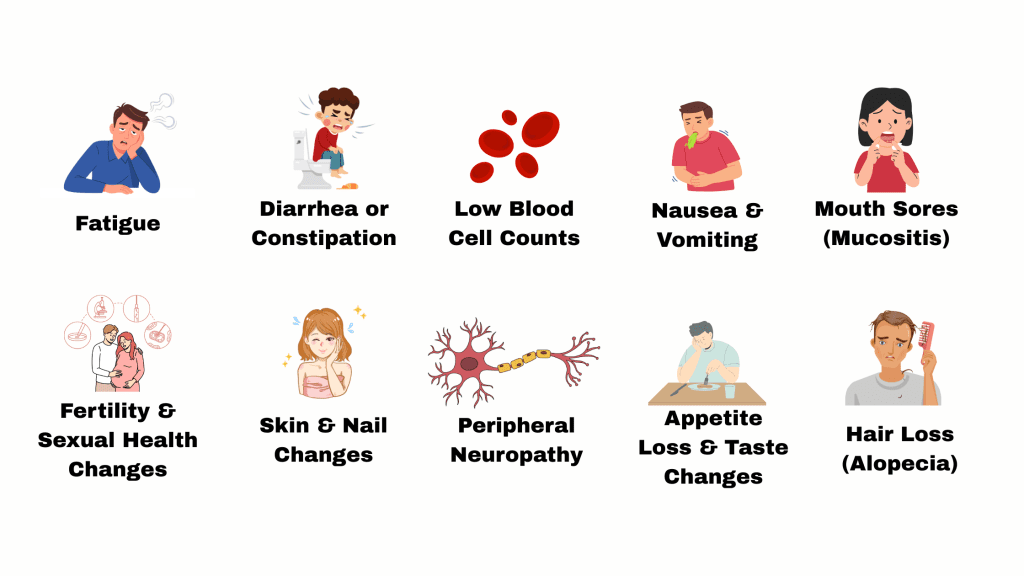
1. Fatigue
Fatigue is one of the most common side effects. Patients often describe it as a deep, persistent tiredness that does not improve with rest.
Why fatigue happens:
- Low red blood cell count
- Nutritional changes
- Stress on the body during treatment
- Sleep disturbances
Tips to manage:
- Rest when needed
- Maintain light physical activity like slow walking
- Eat balanced meals
- Discuss severe fatigue with your doctor
2. Nausea & Vomiting
Chemotherapy can trigger nausea and vomiting, though modern medications help reduce these symptoms significantly.
Types of nausea:
- Acute nausea – occurs within a few hours of treatment
- Delayed nausea – appears 2–3 days later
- Anticipatory nausea – occurs before treatment due to anxiety
How to manage:
- Eat small, frequent meals
- Avoid spicy or oily food
- Stay hydrated
- Take prescribed anti-nausea medicines regularly
3. Hair Loss (Alopecia)
Some chemotherapy drugs cause hair thinning or temporary hair loss. Hair may fall from the scalp, eyebrows, or body.
When hair loss starts: Typically 2–3 weeks after treatment begins.
Care tips:
- Use gentle shampoos
- Avoid hair dryers or styling tools
- Consider scarves, caps, or wigs
- Hair growth usually returns after treatment ends
4. Low Blood Cell Counts
Chemotherapy affects the bone marrow, where blood cells are produced. This can cause:
a. Neutropenia (Low White Blood Cells)
Leads to increased risk of infection.
Symptoms:
- Fever
- Chills
- Sore throat
- Persistent cough
b. Anemia (Low Red Blood Cells)
Causes weakness, dizziness, and breathlessness.
c. Thrombocytopenia (Low Platelets)
May cause bleeding or bruising easily.
Management includes:
- Frequent blood tests
- Growth factor injections
- Antibiotics if infection occurs
- Avoiding cuts, injuries, or contact sports
5. Mouth Sores (Mucositis)
Mouth sores may occur due to the effect of chemotherapy on the lining of the mouth.
Symptoms:
- Ulcers
- Redness
- Painful swallowing
Prevention & care:
- Use alcohol-free mouthwash
- Maintain good oral hygiene
- Avoid acidic or spicy food
- Stay hydrated
6. Appetite Loss & Taste Changes
Chemotherapy may affect taste buds, making food taste metallic, bland, or unpleasant.
Tips:
- Eat high-protein snacks
- Add natural flavor enhancers like lemon (if tolerable)
- Choose soft, easy-to-digest foods
- Try small meals throughout the day instead of large ones
7. Diarrhea or Constipation
Digestive changes are common due to the effect of chemotherapy on the intestinal lining.
To manage diarrhea:
- Drink plenty of water
- Avoid oily foods
- Choose low-fiber foods until symptoms settle
For constipation:
- Increase fiber intake
- Stay active
- Drink warm water regularly
8. Skin & Nail Changes
Some patients experience:
- Dry or itchy skin
- Darkening or discoloration
- Increased sun sensitivity
- Brittle or discolored nails
Care tips:
- Use mild moisturizers
- Avoid harsh soaps
- Apply sunscreen
- Keep nails trimmed and clean
9. Peripheral Neuropathy
Certain chemotherapy drugs affect nerves, causing:
- Tingling
- Numbness
- Burning sensation in hands or feet
Symptoms usually improve after treatment ends, but report worsening symptoms immediately.
10. Fertility & Sexual Health Changes
Chemotherapy may affect fertility, depending on the drug type and dosage.
Possible effects:
- Irregular periods
- Reduced sperm count
- Decreased libido
Discuss fertility preservation options (egg/sperm freezing) before starting treatment.
Serious Chemotherapy Side Effects That Need Immediate Medical Attention
Seek urgent medical help if you notice:
- High fever
- Severe vomiting or dehydration
- Difficulty breathing
- Chest pain
- Severe diarrhea
- Blood in stool or urine
- Uncontrolled bleeding
- Sudden confusion or dizziness
These symptoms could signal a serious complication.
Emotional & Mental Health Effects
Chemotherapy affects more than the body. Many patients experience:
- Anxiety
- Mood swings
- Fear of treatment outcome
- Difficulty sleeping
- Depression
Supportive counseling, meditation, and talking with family or oncology psychologists help patients cope better during treatment.
Tips to Manage Chemotherapy Side Effects
1. Follow your doctor’s treatment plan
Take medications on time and attend all follow-ups.
2. Stay Hydrated
Drink water or oral rehydration fluids frequently.
3. Eat Nutritious Food
Include protein-rich foods, fruits, and vegetables.
4. Rest but Stay Active
Light activity helps maintain strength and reduce fatigue.
5. Manage Stress
Deep breathing, meditation, or gentle yoga helps reduce anxiety.
6. Avoid Infections
Wash hands regularly and avoid crowded places when immunity is low.
Myths & Facts About Chemotherapy Side Effects
| Myth | Fact |
|---|---|
| Everyone loses hair during chemo | Only some drugs cause hair loss |
| Side effects last forever | Most are temporary and improve after treatment |
| Chemotherapy weakens you permanently | The body recovers after treatment |
| All patients have the same side effects | Each patient’s response is different |
| You can’t live normally during chemo | With proper care, many patients continue routine activities |
FAQs on Chemotherapy Side Effects
1. What are the worst side effects of chemotherapy?
Severe nausea, infections due to low immunity, and extreme fatigue are often considered the hardest to manage. However, medicines and supportive care significantly reduce these symptoms.
2. How long do chemotherapy side effects last?
Most side effects improve within weeks after treatment ends. Some, like neuropathy or fatigue, may take longer but are manageable with medical help.
3. Is chemotherapy painful?
The treatment itself is not usually painful, but side effects like mouth sores or nerve pain may cause discomfort.
4. What foods help reduce chemotherapy side effects?
Soft foods, high-protein meals, fresh fruits, soups, yogurt, and oral nutritional supplements support energy and strength.
5. Can chemotherapy affect everyday life?
Yes, but not always severely. Many patients continue normal activities with adjustments and supportive care.
Conclusion
Chemotherapy is a powerful and essential cancer treatment, but it can bring several side effects. With timely medical support, lifestyle changes, and proper monitoring, most side effects can be managed effectively. Staying informed helps patients feel more confident and better prepared during their treatment journey.
If you or a loved one is undergoing chemotherapy, early consultation and regular follow-up with an experienced oncology expert can make the treatment smoother and safer.
Expert Oncology Care by Dr. Shashank Chaudhary
Patients seeking specialized care, personalised treatment planning, and compassionate guidance during chemotherapy often rely on experienced oncology professionals.
Dr. Shashank Chaudhary provides evidence-based cancer treatment with a patient-first approach, helping individuals navigate chemotherapy with confidence, safety, and comfort.
For appointments or queries about Chemotherapy Side Effects, you can contact Dr. Shashank Chaudhary’s team for expert guidance.